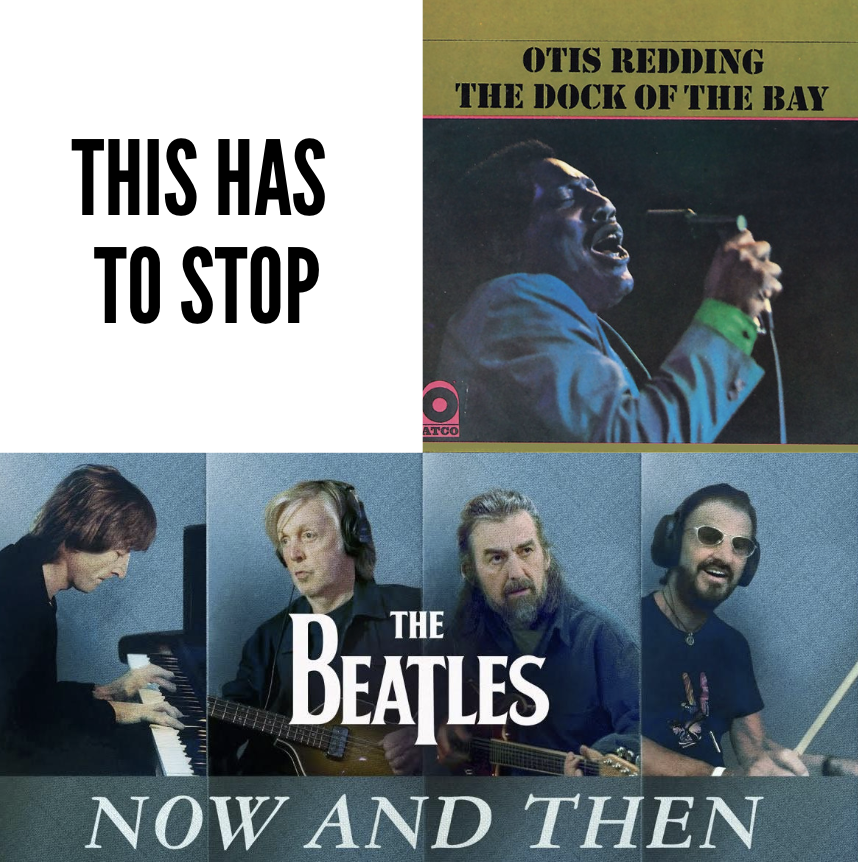
For years, I have wrestled with the idea of posthumously released music. Is it something that should be celebrated or ignored? Otis Redding’s “(Sittin’ On) the Dock of the Bay” sits at the core of this tension. While the beautifully crafted song represents timeless tranquility, many are not aware that Redding never finished the song. Prior to its release, Redding tragically died in a plane crash, causing intense grief in the music community. However, Jim Stewart, the founder of Stax Records, pressed for the song to be released to the public. Within the song, it is hard to imagine any changes being necessary; in fact, the simplicity of the song is a significant contributor to its enduring appeal. However, even the whistling that is riddled throughout the final act was meant to serve as a placeholder for a future chant. Steve Cropper, the producer of the song, even said, “I can’t go in and make something on Otis now… [it was the] hardest thing I ever had to do in my life.”
So what is my issue with this song? To start, I want to make it clear that I do not want to live in a world where “(Sittin’ On) the Dock of the Bay“ does not exist. It is perfect. Even beyond my affinity for Redding, there are countless posthumous releases that are major contributors to the modern music landscape. Albums like Donuts by J Dilla, Grievous Angel by Gram Parsons, and Life After Death by the Notorious B.I.G. would be stuck in the archives if not for a producer taking matters into their own hands. Still, I believe that even if the session recordings are there, it is generally unethical to release any music after the artist’s death.
I can’t go in and make something on Otis now… [it was the] hardest thing I ever had to do in my life.
Steve Cropper (producer on “(Sittin’ On) the Dock of the Bay”)
A major reason is that these songs belong to the musician. Music is art. In the same way that society creates museums for famous visual art pieces, we should cherish music and place it on a pedestal. Each song that is created comes not only from the brain of the artist, but their soul as well. As such, while sometimes the song may appear to be finished, there remains something that compels the artist to continue working on it. Unless it is approved for release, the artist is not complete with their piece. Efforts to publish unfinished music are oftentimes a cash grab. Simple as that. The decision is not made because of a love for music but out of greed to continue profiting from the artist’s vision. The music is the property of the musician, and any art that they have not given permission to be released is a betrayal of their artistic vision.
Music is a personal expression of the artist. Sometimes, the songs were never meant to be shared with the public. Countless examples of private journal entries or voice memos have been placed under the guise of “Deluxe Releases.” Putting a price on a confidential creation represents a major violation of privacy and trust. The reality is that people are simply paying to see something that is priceless. Whether you find their thoughts interesting or not, the decision to release those materials should belong entirely to the creator. Outside of the musical landscape, it is hard to conceptualize public acceptance of the ability to buy a notebook littered with the confidential thoughts of another person. Yet, many are accepting of this when it revolves around musicians. The situation is no different, and neither should our response.
Outside of the musical landscape, it is hard to conceptualize public acceptance of the ability to buy a notebook littered with the confidential thoughts of another person.
A recent example that comes to mind is the death of D’Angelo, an acclaimed soul singer who passed away in October of 2025. D’Angelo had released three true studio albums in his 52-year life, so when he announced that he was working on a new album, my excitement was through the roof. He had released so few albums because of the clear effort, love, and perfectionism that he demanded out of every project. Unfortunately, he never completed his most recent album due to health struggles, and as such, I hope that we never hear it. For an artist who prided himself on meticulously combing through albums before release, ensuring they are an accurate reflection of his thoughts, a release of his new album would directly contradict what he stood for. If he was not ready for the public to hear it, we should not let our greed taint an exceptional legacy.
Speaking of bringing down a band’s catalogue, I would be remiss if I did not mention “Now and Then“, the recent “release” by The Beatles. I love the Beatles. In fact, I am hesitant to ever write down criticism of one of my favorite bands of all time. However, I feel a need to call out Now and Then. Its creation involved Yoko Ono giving Paul McCartney an old demo created by John Lennon. Ringo Starr and McCartney then turned their efforts to successfully use AI to separate the vocals from the background music, eventually building on the demo to create a finished product. Unfortunately, the result was bad. Partially because The Beatles did not create that song. Similar to Mary Shelley’s Frankenstein, this life was not meant to be and appears more like a zombified version of The Beatles’ legacy. Who knows if George Harrison and John Lennon would have approved of this? Again, while I struggled to criticize The Beatles, I believe it is crucial to understand that this was not a true Beatles production. Even with McCartney and Starr’s approval, releasing this song is not indicative of the wishes of the band and should have remained unpublished.
For an artist [D’Angelo] who prided himself on meticulously combing through albums before release, ensuring they are an accurate reflection of his thoughts, a release of his new album would directly contradict what he stood for.
As mentioned, I believe that there are cases in which music should be released after the artist’s death. For example, if the artist was already planning on releasing it and has declared the album as finished. In this case, there is no violation of privacy and the creative vision of the musician has been realized. The other example is if they had left clear instructions on the album’s release in case something were to happen. Some artists have been known to leave notes to the producers about how to handle their discography. For instance, figures like Anderson Paak. have tattoos that explicitly detail that upon death, their demos are to remain private. In this case, following the instructions to hairsplitting detail will provide a tasteful way to build on the artist’s discography.
Music is an art, and not all art is ready to be shown to the public. Regardless of fame or popularity, many artists prefer for their art to remain behind closed doors. While posthumously released music can be done gracefully, it is not our right to make decisions on the art without consulting the musician themself.